
5 Things You Didn't Know About Hydration in Winter
- rusafety100
- Dec 18, 2025
- 5 min read
When most construction workers think about hydration, summer heat waves and scorching job sites come to mind. But here's the thing: winter dehydration is real, and it's sneakier than you might think. While you're bundled up in layers, focused on staying warm, your body is quietly losing water in ways that might surprise you.
Let's bust some myths and dive into five eye-opening facts about staying hydrated during those cold-weather construction projects.
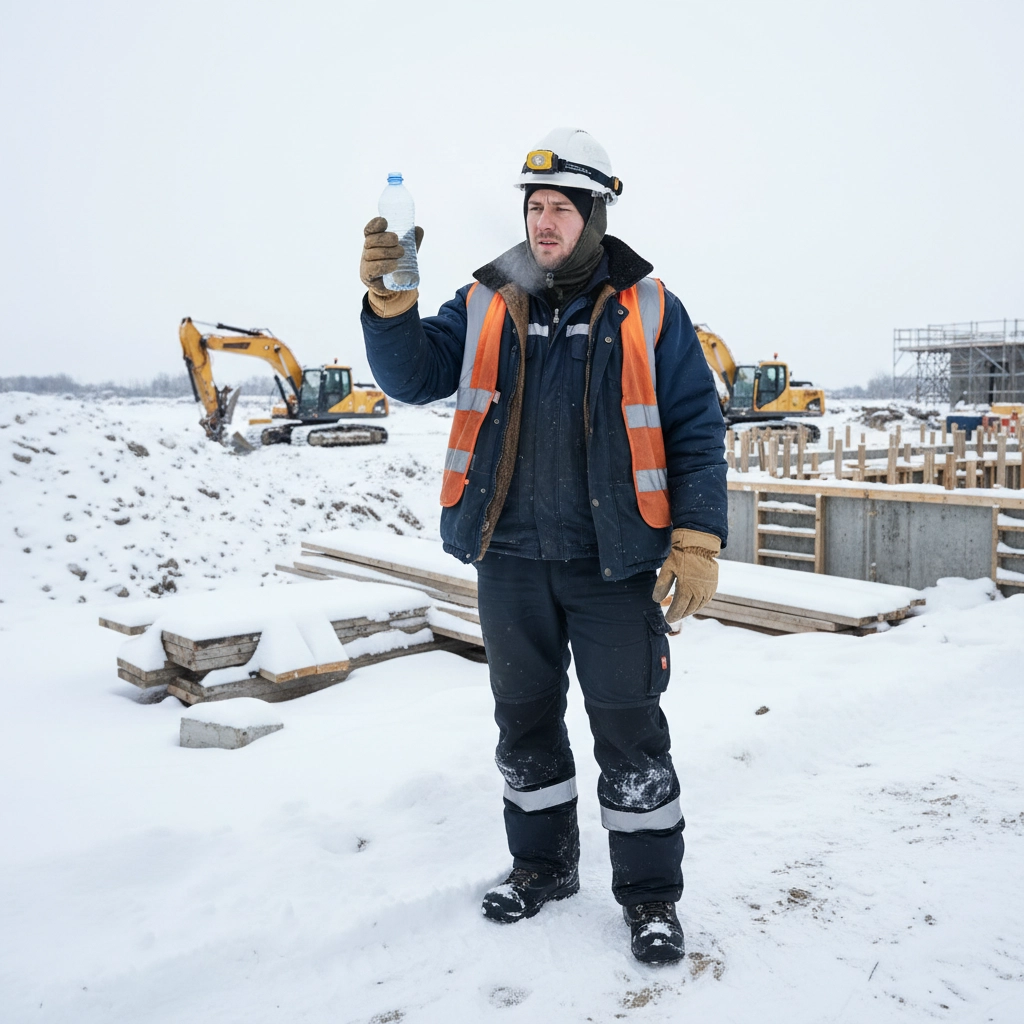
1. Your Thirst Gets "Frozen Out" by Up to 40%
Here's a wild fact: cold temperatures literally trick your brain into thinking you're more hydrated than you actually are. When it's cold outside, your blood vessels constrict to keep your core body temperature stable. This sends a signal to your brain that everything's fine in the hydration department: even when you're starting to get dehydrated.
Research shows that cold weather can suppress your thirst response by up to 40%. Think about it: when was the last time you felt really thirsty while working outside in freezing temperatures? Probably not often, right?
This is especially problematic on construction sites where you're focused on the task at hand. You might be operating heavy machinery, handling materials, or problem-solving complex issues. The last thing on your mind is grabbing a water bottle when you don't even feel thirsty.
The bottom line: Don't wait until you feel thirsty in winter. By then, you're already behind on hydration.
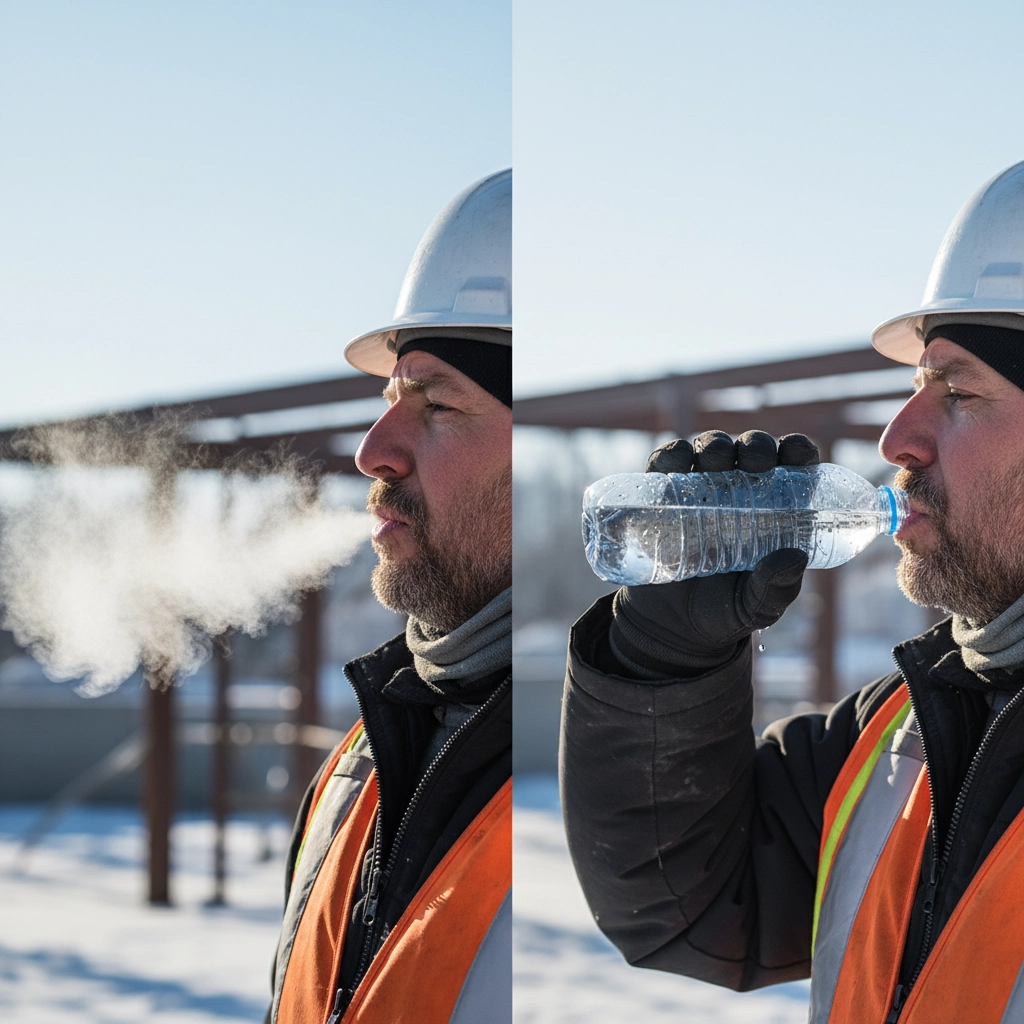
2. Every Breath You See Is Water Leaving Your Body
You know that visible puff of air when you exhale on a cold morning? That's not just carbon dioxide: it's your body's water vapor escaping into the dry winter air. Every single breath.
When you inhale cold, dry air, your respiratory system has to warm and humidify it before it reaches your lungs. This process uses up moisture from your body, and when you exhale, that water vapor is gone for good. On a typical construction site where you're breathing heavily from physical work, this adds up fast.
Here's the kicker: this happens whether you're working hard or just standing around. Your lungs are constantly conditioning the air you breathe, which means you're constantly losing water through respiration: even during lunch breaks or safety meetings.
A construction worker can lose up to a liter of water per day just through breathing in cold, dry conditions. That's more than two standard water bottles, gone before you even factor in sweating or other fluid losses.
3. Cold Makes You Pee More (And It's Not Just Psychological)
Ever notice how you seem to need bathroom breaks more often when it's cold? There's actually a scientific reason for this, and it's not just because you're drinking more hot coffee.
Cold exposure triggers something called "cold diuresis", basically, your kidneys start working overtime to produce urine when your body temperature drops. This happens because cold temperatures cause blood vessels in your arms and legs to constrict, which pushes more blood toward your core. Your kidneys interpret this increase in blood volume as a sign that you have too much fluid, so they start dumping it.
On construction sites, this means you're losing water through increased urination right when your body's thirst signals are already suppressed. It's like a double hit to your hydration levels.
The practical impact? You might find yourself needing to find a restroom more often during winter projects, and each trip is taking valuable water out of your system that you might not think to replace.
4. Indoor Heating Creates a Hidden Dehydration Zone
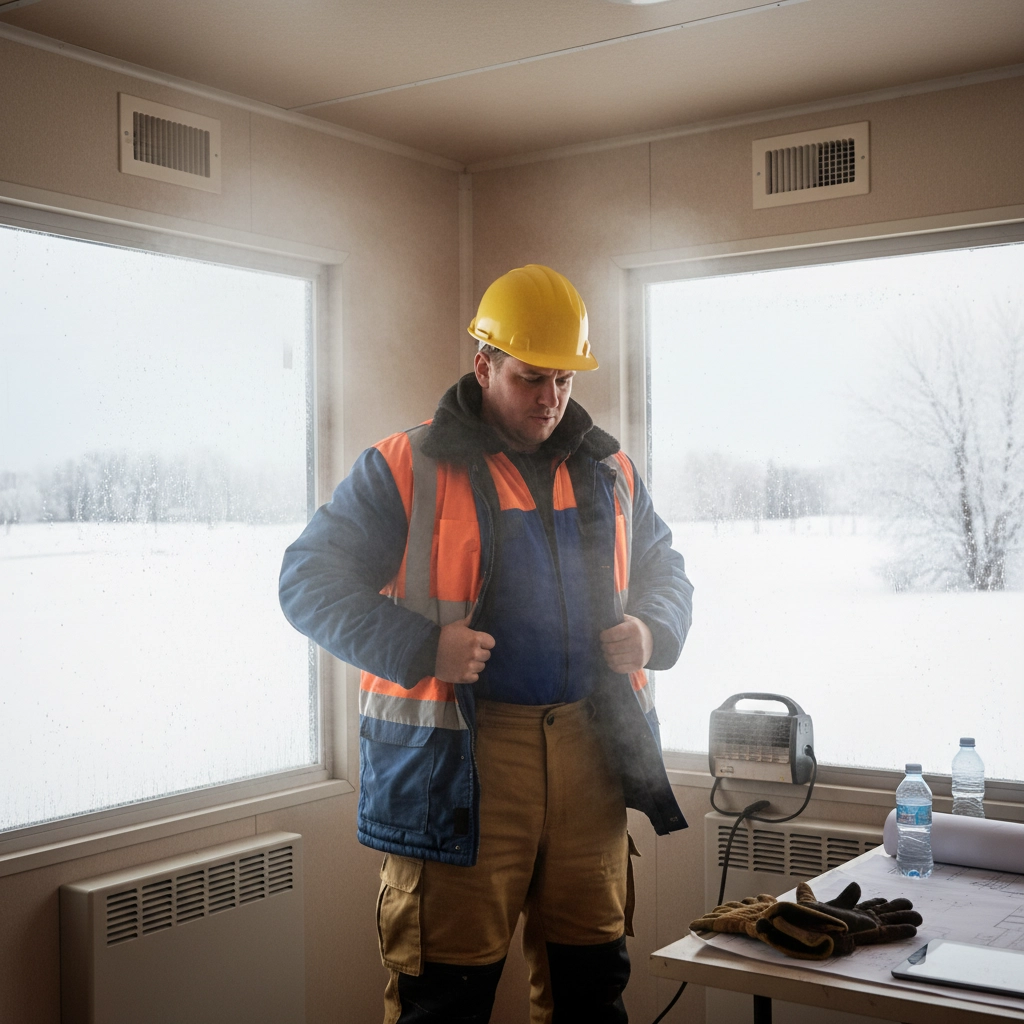
Here's something most people don't realize: heated indoor spaces can be even more dehydrating than cold outdoor air. Construction trailers, heated work areas, and even your truck cab with the heater blasting are essentially moisture-sucking machines.
Heating systems remove humidity from the air, sometimes dropping indoor humidity levels to as low as 10-20%. For comparison, the Sahara Desert typically has about 15-25% humidity. So that warm trailer where you're having your morning safety meeting? It might be more dehydrating than a desert.
When you're in these super-dry environments, you lose moisture through your skin and lungs at an accelerated rate. Your body is essentially being dehydrated from the outside in, even when you're comfortable and warm.
This is particularly relevant for construction workers who split time between outdoor work and heated indoor spaces. You might think you're getting a hydration "break" when you step inside to warm up, but you're actually entering an environment that's pulling moisture out of your body even faster.
5. You're Still Sweating (You Just Can't See It)
This might be the biggest surprise of all: you're probably sweating more in winter than you think. Those multiple layers of work clothes, thermal underwear, and heavy coats create a microclimate around your body that can get surprisingly warm, even when the outside temperature is freezing.
The tricky part is that sweat evaporates quickly in cold, dry air, especially when it's wicked away by synthetic fabrics in your base layers. You never see the sweat, never feel sticky or wet, so you assume you're not losing fluids through perspiration. Wrong.
Construction work is physical work. You're lifting, carrying, digging, and climbing, even in winter. Your muscles are generating heat, and your body is still using sweat as a cooling mechanism: it's just happening invisibly under all those layers.
Some studies suggest that people can lose just as much fluid through "insensible" sweating in winter as they do through visible sweating in summer. The difference is awareness. In summer, you see and feel the sweat, so you drink more water. In winter, the sweat disappears before you notice it, but the dehydration is just as real.
The Real-World Impact on Construction Sites
So what does all this mean for actual construction work? Dehydration: even mild dehydration: can seriously impact your performance and safety on the job site.
When you're dehydrated, your reaction time slows down, your concentration decreases, and your decision-making gets impaired. On a construction site where split-second decisions can mean the difference between safety and injury, this is no joke.
Dehydration also affects your physical capabilities. Your strength decreases, you get tired faster, and your coordination suffers. This increases the risk of accidents, especially when you're working with heavy machinery or at heights.
Plus, there's the issue of cold-related injuries. When you're dehydrated, your blood volume decreases, which makes it harder for your body to maintain proper circulation to your hands and feet. This increases your risk of frostbite and other cold-weather injuries.
Simple Solutions for Winter Hydration
The good news is that once you understand these hidden dehydration factors, the solutions are pretty straightforward:
Set hydration reminders: Since you can't rely on thirst, set phone alerts or ask a buddy to remind you to drink water regularly throughout the day.
Pre-hydrate: Start your day with a full glass of water, and drink another glass before you head out to the job site.
Monitor your urine: Dark yellow means you need more fluids. Aim for light yellow or clear.
Choose your drinks wisely: Water is best, but warm herbal teas or diluted sports drinks can work too. Limit caffeine and alcohol, as both can increase dehydration.
Protect yourself from dry air: If possible, use a humidifier in trailers or indoor work spaces.
Remember, staying hydrated in winter isn't just about comfort: it's about safety, performance, and keeping yourself healthy on the job. Your body is working hard to keep you warm and functional in challenging conditions. The least you can do is give it the water it needs to do the job right.
For more workplace safety tips and training resources, visit Rise Up Safety LLC to learn how we can help keep your team safe and productive year-round.
Comments