
Keep Your Cool: Heat Prevention in Construction Safety (Part 4)
Let's be honest: even with all the heat safety knowledge in the world, we're still seeing workers drop from heat-related illnesses on construction sites. Why? Because knowing what to do and actually doing it are two different things. In this fourth part of our heat prevention series, we're tackling the real barriers that stand between your crew and staying safe in the heat.
The Myths That Kill: Common Heat Safety Misinformation
"Real construction workers don't need water breaks." "If you're tough enough, you can work through anything." "Heat stroke only happens to out-of-shape guys." Sound familiar? These dangerous myths are still floating around job sites, and they're putting lives at risk.
Myth #1: "You only need to worry about heat when it's over 100°F" Reality check: Heat illness can occur at temperatures as low as 70°F when humidity is high. The combination of temperature, humidity, sun exposure, and physical work creates the perfect storm: not just the thermometer reading.
Myth #2: "Drinking sports drinks is better than water" While electrolytes matter, plain water should be your go-to for the first few hours of work. Sports drinks are great for longer shifts, but starting with them can actually slow down hydration. One electrician in Phoenix learned this the hard way when he relied solely on energy drinks and ended up in the ER with severe dehydration.
Myth #3: "Taking breaks shows weakness" This old-school mentality has cost too many lives. Regular breaks aren't weakness: they're smart business. A crew that takes scheduled breaks stays productive all day, while the "power through" crew often sees productivity drop dramatically in the afternoon heat.
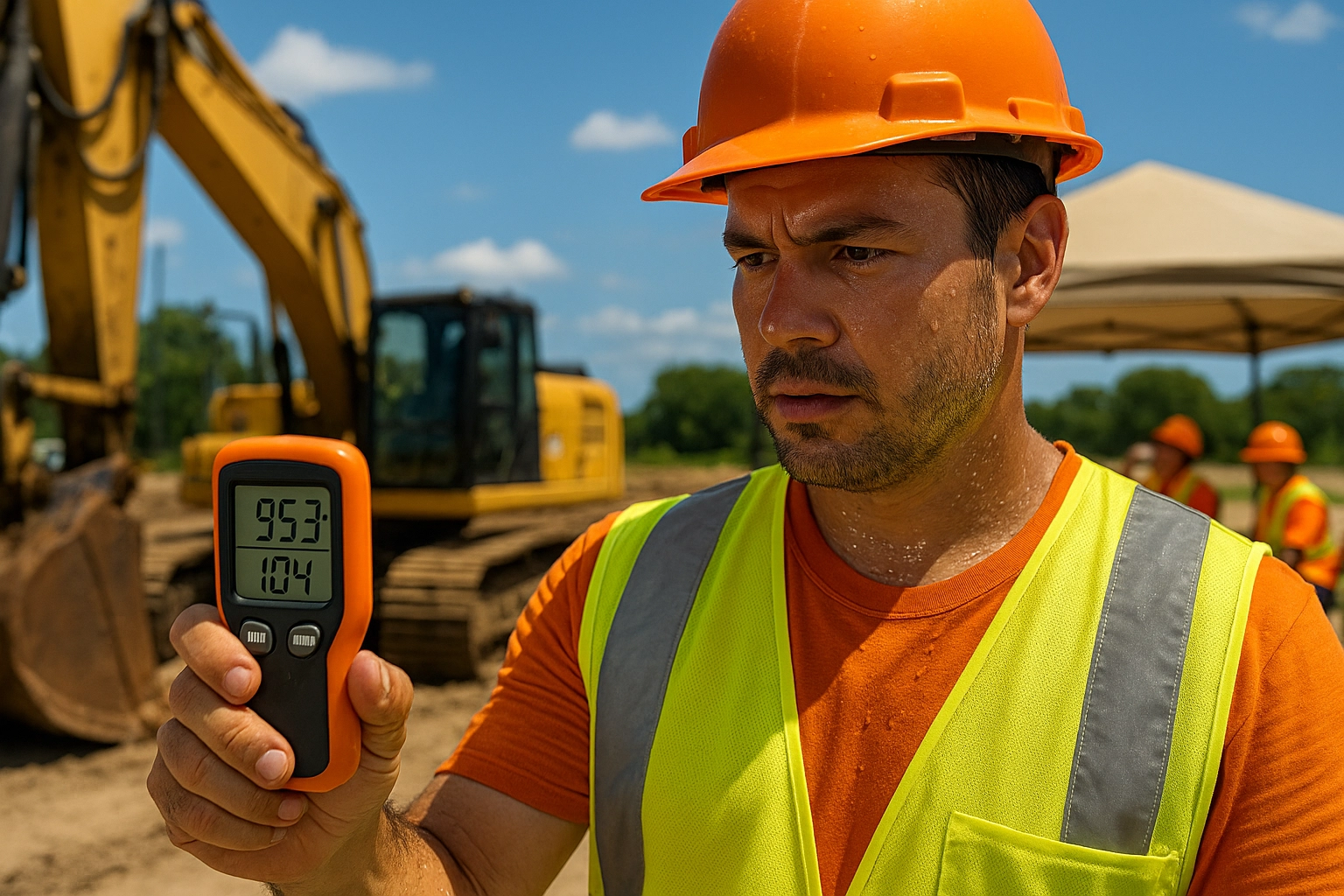
The Culture Problem: When "Tough" Becomes Dangerous
Construction culture runs deep, and unfortunately, some of that culture works against heat safety. The pressure to appear tough, meet deadlines, and not "slow down the job" creates an environment where workers ignore warning signs.
The Peer Pressure Factor New workers especially feel the pressure to keep up. They'll push through dizziness, nausea, and fatigue rather than speak up. One foreman told us about a 22-year-old apprentice who collapsed during his second week because he was afraid to ask for a water break: he thought the older guys would think he was soft.
The Deadline Dilemma When projects are behind schedule, safety often takes a backseat. Foremen feel pressure from project managers, who feel pressure from clients. But here's the math that matters: losing one worker to heat illness can set your project back days or weeks, not to mention the potential legal and financial consequences.
Common Mistakes That Cost Lives
Even well-intentioned crews make mistakes that put everyone at risk. Here are the ones we see most often:
Starting Too Strong New workers or those returning from time off diving straight into full-intensity work in heat. The body needs 7-14 days to properly acclimatize. Rushing this process is like asking for trouble.
Ignoring the Warning Signs Supervisors not trained to recognize heat illness symptoms in their crew. When someone's stumbling, confused, or has stopped sweating in extreme heat, that's a medical emergency: not a time to "walk it off."
Poor Hydration Timing Waiting until you're thirsty means you're already behind. By the time your brain sends the thirst signal, you're already partially dehydrated.
Inadequate Shade "There's a tree over there" isn't adequate shade. Cal/OSHA requires enough shade to accommodate all workers on break: not just one person at a time.
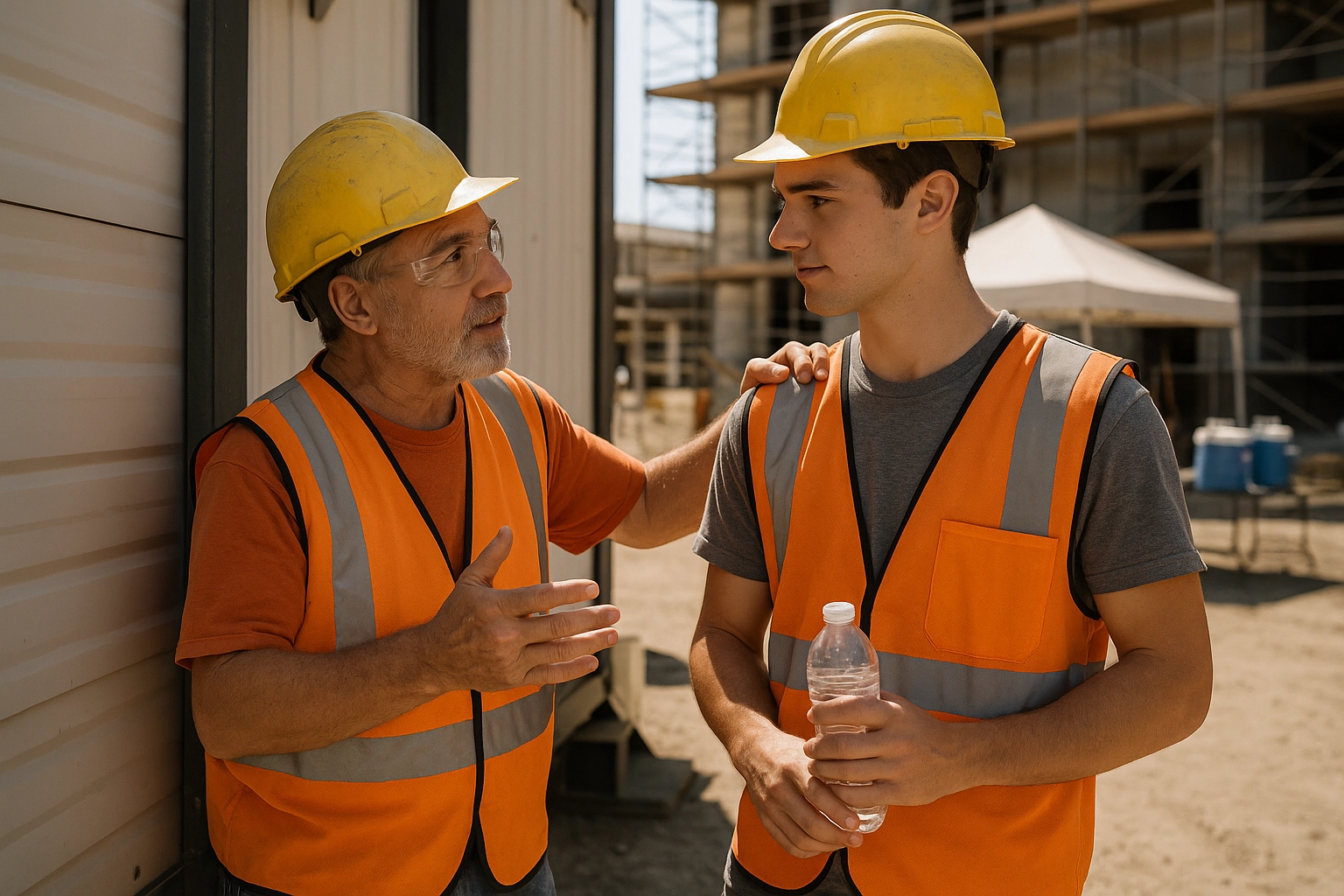
Breaking Through: Training That Actually Works
Standard safety meetings aren't cutting it. Workers need hands-on, practical training that addresses real jobsite scenarios.
Make It Personal Share real stories from your industry and region. When workers hear about heat illness happening to someone like them, on a job like theirs, it hits different than generic statistics.
Practice Scenarios Run through actual heat emergency situations during cooler morning hours. What does heat exhaustion look like? How do you help someone showing signs? Who do you call? Where's the nearest hospital?
Address the Culture Head-On Have open conversations about the pressure to "tough it out." Make it clear that speaking up about heat concerns is expected, not optional. One successful contractor we work with implemented a "no questions asked" policy: any worker can call for a heat break without explanation or consequences.
Communication Strategies That Save Lives
Daily Heat Check-ins Start each day by checking weather conditions and discussing the heat safety plan. Apps like OSHA's Heat Safety Tool can help determine risk levels and appropriate precautions.
Buddy System Implementation Pair experienced workers with newer ones, with clear instructions to watch for heat illness signs in their partner. This creates accountability and removes the burden from individuals to self-report problems.
Clear Emergency Protocols Everyone should know exactly what to do if someone shows heat illness symptoms. Post emergency procedures prominently and practice them regularly. Include local emergency numbers and the nearest hospital route.
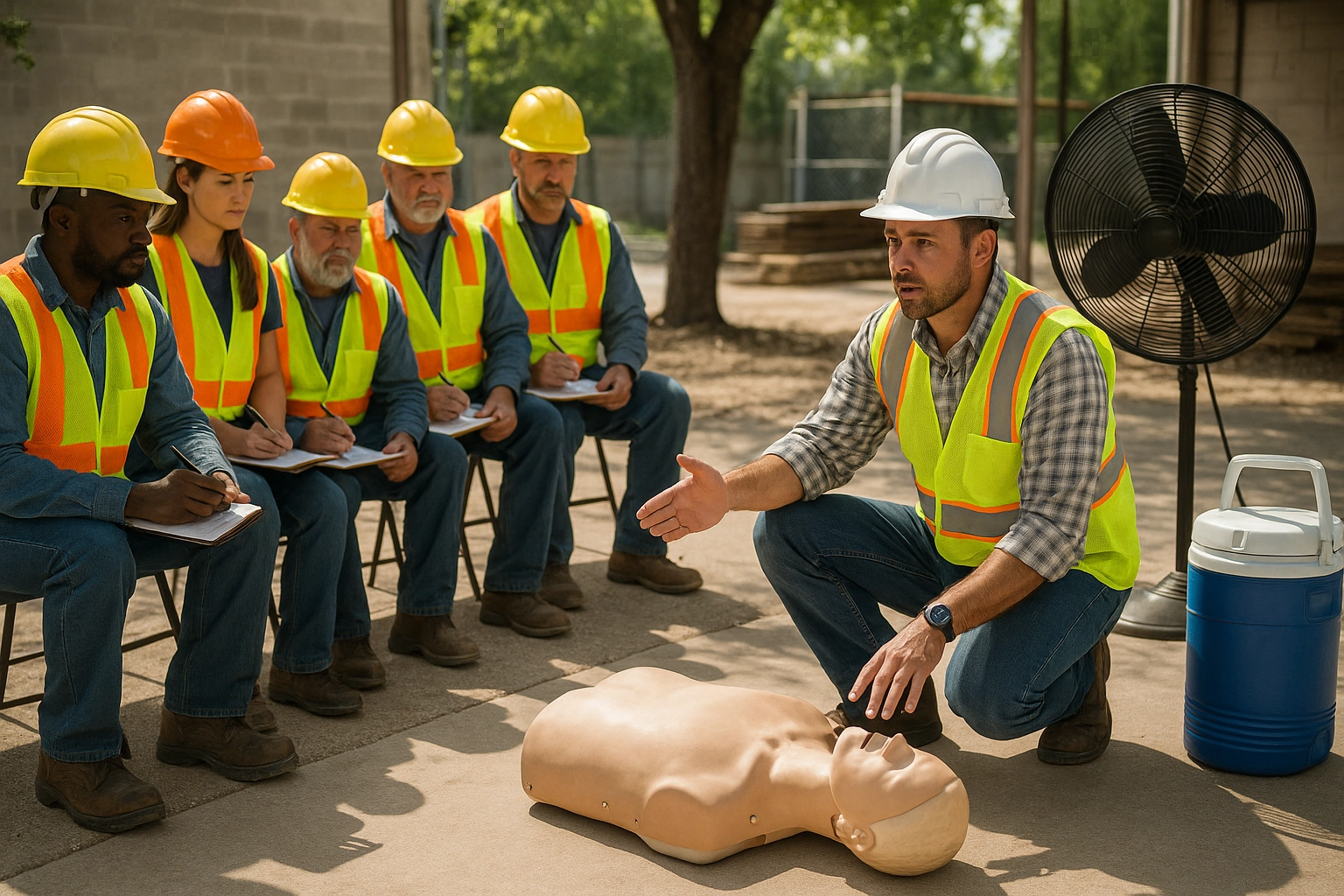
Leadership: Setting the Tone for Heat Safety
Lead by Example When supervisors take water breaks, wear appropriate clothing, and seek shade, it gives permission for everyone else to do the same. Actions speak louder than safety meetings.
Remove Barriers Make water easily accessible: not just available. Install water stations throughout the job site, provide insulated coolers, and ensure ice is available. If workers have to walk 200 yards for water, many won't bother.
Recognize Good Decisions Publicly acknowledge workers who make smart heat safety choices. When someone calls for a break or helps a coworker showing symptoms, that's leadership behavior worth celebrating.
Building a Heat-Smart Team
Cross-Training Benefits Train multiple crew members to recognize heat illness symptoms and respond appropriately. Don't leave this responsibility to just supervisors: everyone should be able to step up when needed.
Regular Equipment Maintenance Ensure cooling equipment (fans, misters, air conditioning in break areas) is properly maintained and functioning. A broken AC in the break trailer defeats the purpose of taking breaks.
Flexibility in Scheduling When possible, adjust work schedules during extreme heat warnings. Starting earlier, taking longer midday breaks, or shifting critical tasks to cooler parts of the day can make all the difference.
Your Action Plan: Making Changes Today
Week 1: Assessment
Evaluate current heat safety practices honestly
Identify cultural barriers specific to your crews
Survey workers anonymously about heat safety concerns
Week 2: Training Overhaul
Implement hands-on heat safety training
Address myths and misinformation directly
Practice emergency response scenarios
Week 3: Infrastructure
Improve water access across job sites
Ensure adequate shade structures
Check and maintain cooling equipment
Week 4: Culture Shift
Establish clear heat safety policies with consequences
Recognize and reward good heat safety decisions
Create open communication channels for safety concerns
The bottom line: heat prevention isn't just about having policies on paper: it's about creating a culture where following those policies is expected, supported, and rewarded. When your crew sees that heat safety is a priority from the top down, they'll make it a priority too.
Remember, every worker deserves to go home safely at the end of the day. By addressing these barriers head-on and implementing real solutions, you're not just preventing heat illness: you're building a stronger, more productive, and more sustainable operation.
For comprehensive heat safety training that addresses these real-world challenges, check out our course offerings designed specifically for construction professionals.


Comments